Monday, 24 July 2017

Olustvere and traditional Icelandic wood carving


In July (2017)I took part in an international Craft Camp arranged by Viljandi kultuurakadeemia in Olustvere mois, Estonia. There were participants from 17 different countries, many of them with Estonian ancestry. We were 15 altogether from Iceland. We could choose between a variety of workshops, and I chose plaiting, dyeing with plants and wood carving.

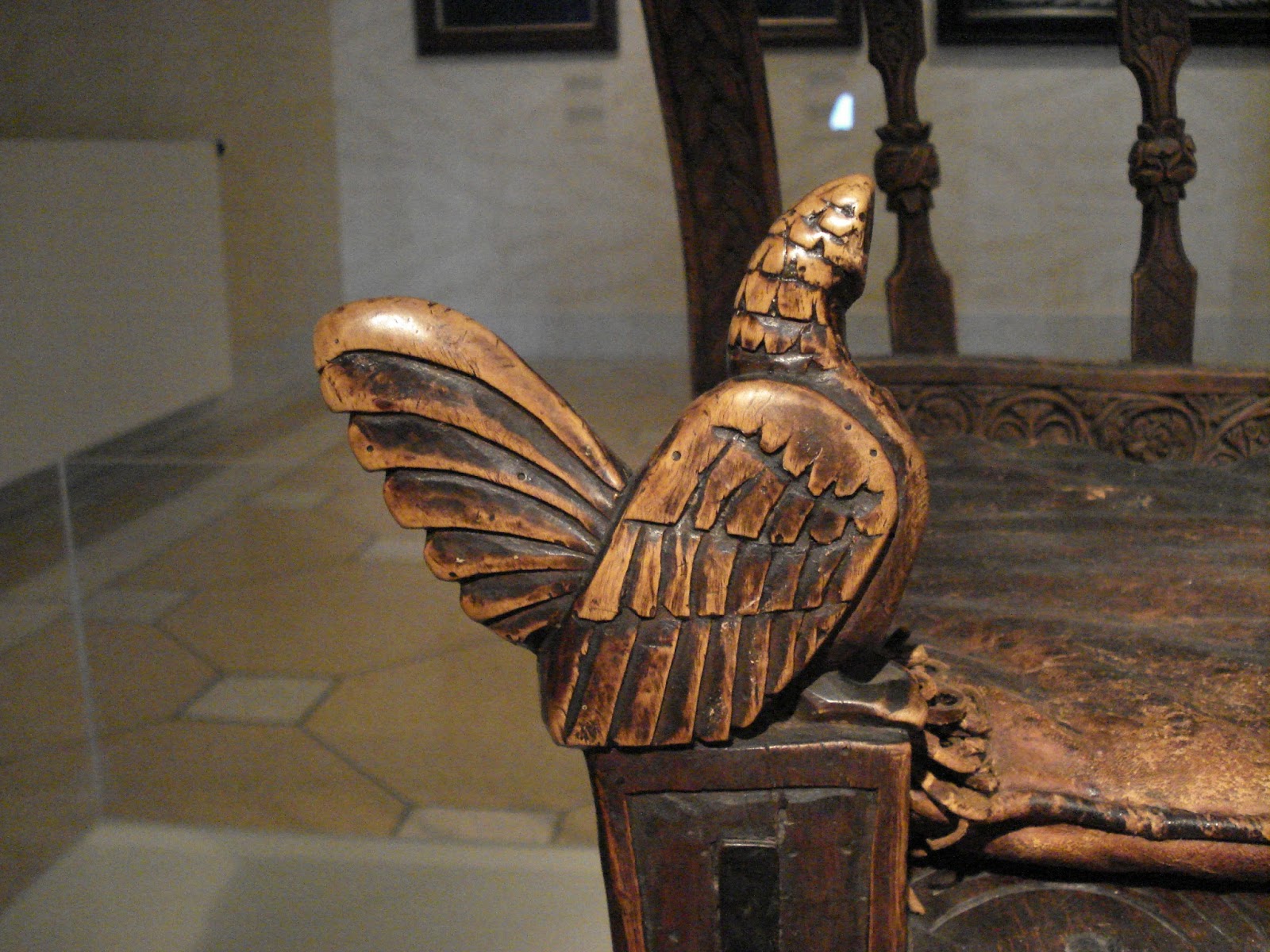
Now, when back at home, I feel so empowered and full of ideas that I do not know from which end to begin.  Meanwhile I shall publish here some photos of pieces of traditional Icelandic wood carving, exhibited in the National Museum. The first one is a chair from about 1500. In front there are roundels with zodiac signs in them and the name in Latin and in runic inscription. 


There are three chairs of the similar type in the museum and they are supposed to have belonged to the Grund estate in northern Iceland. The one depicted here is thought to have been the chair of Thórunn, daughter of Jón Arason, the last Catholic bishop of Iceland, who was beheaded in 1550 by the reformists.

I have been interested in these chairs a long time and even considered of making something similar myself, a kind of modern version, and draw a design for it.  Now I only have to find time for realizing this dream!


Sunday, 10 April 2016

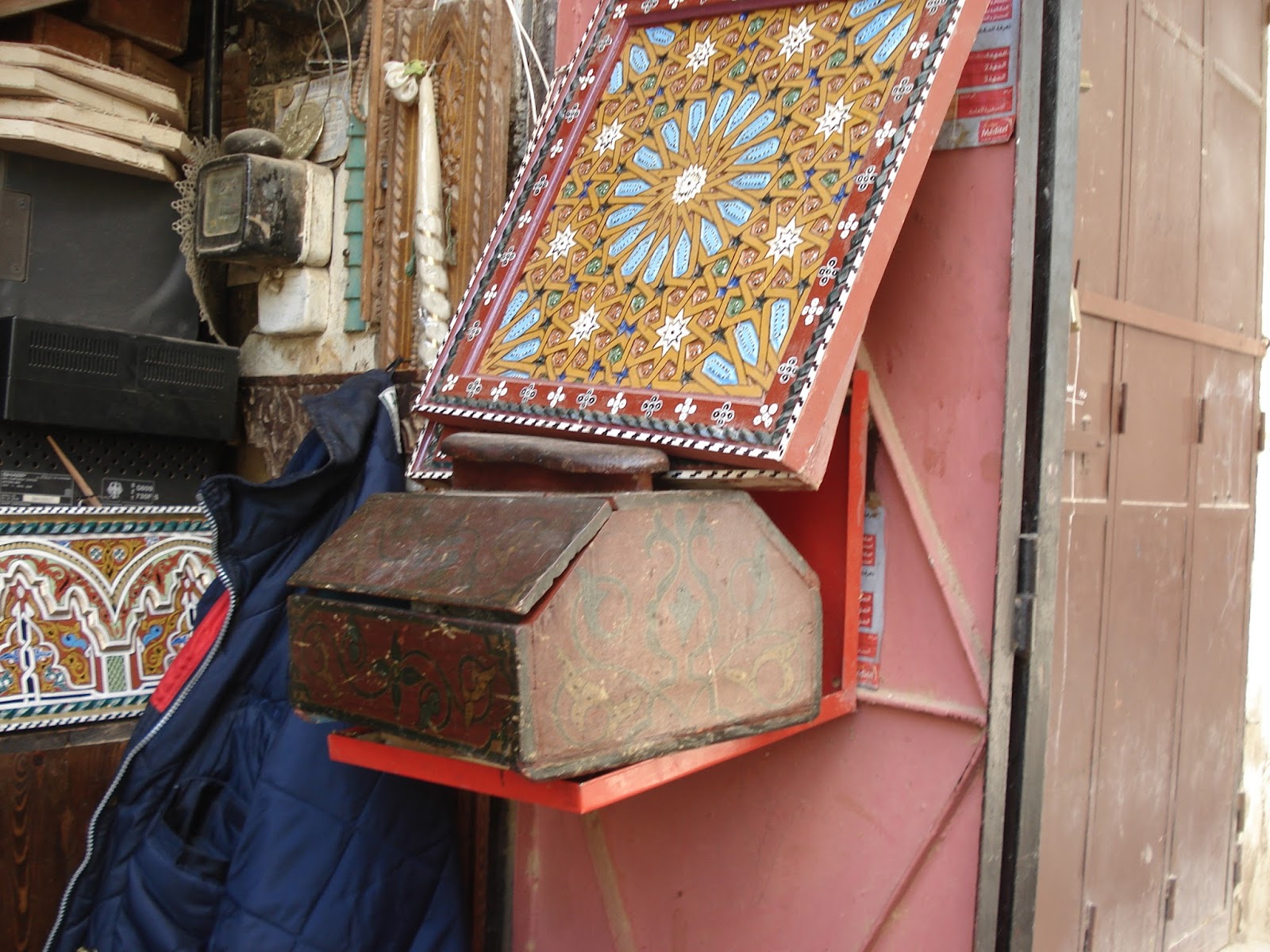
Wood Carving in Morocco

Wood carving is perhaps one of the oldest types of handicrafts.  Everywhere in the world we can see beautiful pieces of carving. On my travels in the Near East and Middle Asian countries I have often seen master pieces that have been created with only one knife, or not more than 1-3 knives.  The workshops are often small or the carvers just sit on a stool in front of a small shop.  Sometimes they do not even have a table.

The Arabs love colours and many times the carvings are beautifully painted with natural colours, especially if they are used as panels.


Friday, 8 April 2016

Moroccan Arts and Crafts

During the past Easter holidays (March 2016) we travelled around Morocco and got acquainted with Moroccan handicrafts.

The old capital Fez is known for its hand-painted ceramics and the blue (cobalt) colour of it.  The young men - yes, it was without exception males - sat in the very rudimental workshops, some forming discs and vases, others painting them with natural colours. Our guide put an extra emphasis on the fact that hand-made is always more valuable than a factory-made product. We were told that the full-scale study in ceramics takes ten years.


Tuesday, 8 March 2016

Simple things about weaving looms

Simple things about weaving looms


I learned the basic things of weaving for more than thirty years ago, but have not practised it enough to master the art. Since I now have more time, I decided to start everything from the beginning.
Youtube is a treasure chest of ideas.  There I found a very good video from the Norwegian Handicraft Association (Norges husflidslag) and another, quite similar (but not as good) from the Swedish one (Hemslöjd).  From Finland I ordered two booklets, both from Mallikerta,which were very good, but they would not have sufficed, if I had not had previous knowledge and experience of weaving. But they added to my previous knowledge and helped me to understand better how to set up my new contramarch.  Somehow it seems that those who know how to do things, cannot imagine what problems simple things can rise for a novice. But it is the simple things that are the most important and the ones that we want to get an answer for!

Helpful books on tablet weaving - Lautanauha - Brettwebchen

It has been a while since I wrote here last time; been occupied by other things.  Had an accident and broke my wrist so there has not been a lot of handwork lately.  Now I am starting to work again, have finished the tablet weaving project I started in November 2015.  I am a novice in that area, just trying to figure out how it all works.  My most precious aid on that journey are the two Finnish books on the subject:
It is good to be able to read on one's native language, but the other book is also with an English text ans should serve for most enthusiasts.  What I find best in these books are the fine photos in colour and the charts that give one all the necessary information.  One does not need to guess into which direction to draw or how to turn the tablets. (Below my latest project in tablet weaving. 12 tablet; Bianca cotton).

Thursday, 9 July 2015

Glitofið klæði - Old Icelandic cloth in brocade

Þetta fallega klæði í glitvefnaði er í Skógarsafni - margt áhugavert.  Uppáhalds safnið mitt á Íslandi.

This beautiful hand-woven cloth is from the Museum at Skógar, South-Iceland, my favorite museum in this country.  This kind of weft was typical of Iceland and used a.o.th. under the saddle.

Add caption

Wednesday, 1 July 2015

Icelandic drinking horn

Icelandic drinking horn from 16th century, carved by Brynjólfur Jónsson.

Drykkjarhorn lögréttumanns var þetta horn kallað á sýningu Þjóðminjasafnsins. Eins og segir í kynningatextanum:

Lykilgripur tímabilsins 1600-1800

Drykkjarhorn, skorið af Brynjólfi Jónssyni bónda í Skarði í Landsveit. Brynjólfur hefur verið hagur myndskeri ...
mörg verk eru til eftir hann..... Áletranir á horninu eiga við myndirnar. Þar er einnig ártalið 1598 og nafn Þorleifs Ásmundssonar sem lét gera hornið. Þorleifur var lögréttumaður á Hvoli í Hvolhrepp og mágur Brynjólfs.

A detail. All the motifs are from the Old Testament.  On the tail of the horn there is a dragon.